Chat with us
Connected healthcare for patients, providers and care teams

Custom Healthcare App Development Company

Digittrix is a healthcare mobile app development company delivering custom healthcare software development services for providers, startups, and care teams. From telemedicine and appointment booking to patient records, EHR/EMR integrations, and remote monitoring, we bring your care workflows together in connected web and mobile applications.

  • Since 2014 Product delivery experience
  • Mobile + Web Connected care platforms
  • Privacy + Care Thoughtful patient experiences
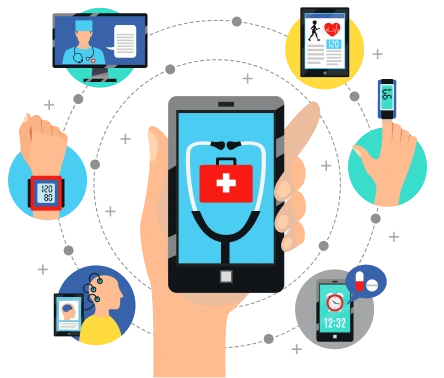
Connected healthcare platform with telemedicine, health records, and wearable monitoring

Cross-Industry Delivery Experience

Selected organizations represented across Digittrix’s broader product portfolio. Explore our published work and client reviews to learn about our delivery experience across industries.

HappyFidos brand logo
Dudar company logo
Swach Bharat mission logo
Amrutam brand logo
Broomy brand logo
Pongo company logo
GoodLives company logo
Zajel company logo
Satyamev Jayate logo
IKEA brand logo
O&M company logo
CarryOn brand logo
Kazo brand logo
Petovac company logo

Custom Healthcare Software Development for Connected Care

As a healthcare application development company, we build healthcare app development solutions around the people using your platform. Patients need simple access to care, providers need reliable clinical workflows, and administrators need visibility into appointments, records, communication, and daily operations.

Start with your most important care journey, then build in telemedicine, EHR/EMR connectivity, wearable integration, and analytics as your roadmap grows.

Planning a local project? Meet our healthcare app development team in Mohali to discuss hospital, patient, and doctor workflows at our Sector 75 office.

3 user groups
Patients, providers, and administrators
Mobile + web
Connected apps and healthcare portals
Built for you
Your care model, workflows, and integrations
Selected wellness projects

Wellness Experiences Across Mobile and Web

Explore Digittrix’s documented work with Amrutam and I-CAN Genes, from mobile consultation and commerce to daily wellness journeys on the web.

Amrutam app welcome screen from its official Google Play listing Amrutam wellness hub showing product discovery and shopping Amrutam consultation screen showing Ayurvedic practitioner discovery
Public app screenshots from Amrutam’s Google Play listing · captured 22 September 2026.
Ayurveda & wellness · Mobile

Amrutam

Digittrix’s role: Mobile app development, documented in our published Amrutam project account.

The public product connects practitioner discovery and consultations with wellness content, product shopping, and follow-up journeys.

Public workflow: Explore content or practitioners, compare profiles, start a consultation or purchase, then return for order updates and follow-up activity.

  • Consultation journeys
  • Wellness content
  • Product discovery & ordering
Read the Amrutam case study
I-CAN Genes homepage screenshot showing wellness categories, navigation, and daily productivity routines
Public I-CAN Genes homepage · captured 22 September 2026.
Personalized wellness · Web

I-CAN Genes

Digittrix’s role: Website development, based on the project attribution documented in our case study.

The responsive platform brings daily routines, guided activities, content discovery, and account access into one wellness experience.

Public workflow: Choose a daily routine or wellness topic, continue into guided content, then use account or companion-app access to return.

  • Daily wellness routines
  • Guided content
  • Web & companion-app access
Read the I-CAN Genes case study

These projects demonstrate wellness product experience. Screenshots show the current public products; the linked case studies explain Digittrix’s documented role and attribution limits. They do not establish HIPAA compliance or clinical outcomes.

Better connected operations

Business Challenges We Solve

Connect the tools, information, and workflows that help your teams deliver a better patient experience.

Fragmented patient records

Disconnected patient communication

Privacy and access-control challenges

Difficult EHR / EMR integrations

Limited remote-care capabilities

Complex patient experiences

Growing data and platform demand

Manual operational workflows

Eight connected healthcare app formats

Types of Healthcare Apps We Develop

Choose the solution that fits your care model. Each product brings patient, provider, and administration workflows together around your organization.

Telemedicine Apps

As a medical mobile app development company, we connect patients and care teams through appointment booking, video consultations, secure messaging, and follow-up workflows.

  • Video consultations
  • Care-team chat
  • Follow-up reminders
Plan this healthcare product

Healthcare App Development Services

From the first care journey to launch and ongoing support, plan every part of your digital healthcare product.

Four connected delivery tracks

Bring your healthcare platform together

Product design, application development, integrations, and security work together on one practical delivery roadmap.

Discuss your requirements

Healthcare Mobile App Development Services

Our mobile medical app development connects patients, clinicians, and operational teams through iOS and Android applications.

  • iOS and Android applications
  • Responsive healthcare portals
  • Patient, provider, and admin workflows
  • Release preparation and platform updates

Healthcare UI/UX Design

Clear interfaces that make booking, communication, and record access easier to use.

  • Patient and provider journey mapping
  • Wireframes and interactive prototypes
  • Accessible interface design
  • Usability reviews across devices

Custom Healthcare Software Development Services

Connect the clinical, billing, and operational systems your care teams already rely on, with workflows tailored to your organization.

  • EHR and EMR connectivity
  • Telemedicine and payment APIs
  • Wearable and device integrations
  • Data mapping and workflow automation

HIPAA Compliant App Development Planning

HIPAA compliant mobile app development starts with understanding the product, data flows, and responsibilities. We scope security controls and ongoing support around those requirements.

  • Role-based access and audit trails
  • Data protection and consent workflows
  • Testing, maintenance, and updates
  • Monitoring and performance optimization

Core Features of Our Healthcare Apps

Our custom healthcare mobile development brings patient, provider, and administration features together around your care model and release scope.

Patient Experience

  • Registration & patient profiles
  • Doctor discovery & appointment booking
  • Video consultations & secure chat
  • Medical records & report access
  • Prescription access & reminders
  • Payments & billing history
  • Notifications & follow-up scheduling
  • Consent & account preferences
Patient Experience in digital healthcare

Provider Workspace

  • Provider profiles & availability
  • Appointment & consultation management
  • Patient records & care history
  • Digital prescription workflows
  • Care-team communication
  • Lab reports & document sharing
  • Remote monitoring dashboards
  • Follow-up & referral workflows
Provider Workspace in digital healthcare

Administration

  • Role & permission management
  • Provider & service management
  • Appointment oversight
  • Payment & billing operations
  • Reporting & analytics
  • Notification configuration
  • Audit & access logs
  • Integration & support management
Administration in digital healthcare
Built around your care model

Healthcare Organizations We Serve

Tailored digital products for providers, startups, and organizations across the healthcare ecosystem.

Hospitals & Clinics

Patient management, telemedicine, and day-to-day hospital workflows.

Pharmaceutical Companies

Inventory, distribution tracking, and operational reporting.

HealthTech Startups

Custom platforms for new healthcare services and care models.

Fitness & Wellness

Health tracking, lifestyle planning, and wellness communities.

Diagnostic Centres

Test bookings, report management, and patient access.

Insurance Providers

Claim workflows, policy management, and customer interaction.

Mental Health Platforms

Therapy scheduling, virtual sessions, and wellness tracking.

Elder Care Services

Care coordination, remote monitoring, and family communication.

Healthcare App Integration Services

Our custom healthcare software development solutions start with a defined workflow, the data it needs, and the systems authorized to exchange it. These examples show what to resolve during discovery; the agreed scope identifies the integrations we will deliver.

Integration scope, dependencies, and acceptance checks
WorkflowAccess and data to confirmChecks before release
Appointments and patient recordsProvider and patient identifiers, available slots, record fields, vendor API access, and permitted read/write operations.Patient matching, field mapping, time zones, duplicate requests, failed updates, and a tested recovery path.
Video consultationsVideo provider, session tokens, patient/provider permissions, consent needs, and whether recording belongs in the scope.Authorized joins, expired sessions, poor connectivity, reconnects, and notification delivery. Recording is not assumed.
Payments and notificationsBilling events, payment provider, delivery channels, approved message content, and webhook access.Payment confirmation, refunds, duplicate callbacks, failed messages, and separation of payment data from health records.
Devices and remote monitoringSupported device APIs, units, timestamps, sampling limits, and who is responsible for reviewing incoming readings.Missing or delayed readings, unit conversion, revoked access, and escalation ownership agreed with the care team.

Standards follow the available system: Where a vendor exposes FHIR resources, discovery should confirm its version, supported resources, authentication, and access limits. HL7 messages or DICOM imaging workflows need separate interface and data requirements. Naming a standard does not establish that a particular vendor or deployment is supported.

Define the handover: Include an interface inventory, data mapping, sandbox test cases, error handling, monitoring responsibilities, and release acceptance criteria in the proposal. For a consultation-focused product, explore our telemedicine app development services.

Privacy, Security & HIPAA Planning

Start by establishing whether HIPAA applies to the product and the organizations involved. The discovery scope should identify health-data flows, access, vendors, and responsibilities before selecting controls.

Product and engineering scope

Agree which data the application collects, where it moves, and which roles may access it.

  • Authentication, role permissions, and access revocation.
  • Encryption, key handling, audit events, and sensitive-data logging rules.
  • Backup and restore tests, security test evidence, and agreed handover documentation.

Client and care-team decisions

The operating organization identifies its intended use, applicable obligations, and decision makers with qualified advisers.

  • Approved data uses, retention, consent, and clinical workflows.
  • Risk review, staff access approvals, and training responsibilities.
  • Incident contacts, escalation procedures, and ongoing reviews.

Vendor and operating agreements

Check the actual hosting, video, messaging, and other services selected for the product.

  • Relevant business associate agreements, where required.
  • Data locations, subcontractors, service limits, and access controls.
  • Monitoring, patching, incident response, and ownership after launch.

The signed scope assigns each responsibility between Digittrix, the client, and service providers. A list of controls or a software release does not itself establish compliance. See the HHS guidance for health app developers.

Technology blueprint

Healthcare App Technology Stack

For mobile healthcare app development, we select technologies around your workflows, integrations, data requirements, and long-term maintenance needs.

Architecture layers

Final technology choices depend on your product scope, system access, security requirements, and operating model.

01 · Patient & provider experience

Frontend + Mobile

Responsive web and mobile interfaces for patients, clinicians, and administrators.

4 technologies

React

Flutter

Swift

Kotlin

02 · Services & workflows

Backend APIs

Application services connect appointments, records, communication, billing, and business rules.

5 technologies

Node.js

PHP

Laravel

Python

CodeIgniter

03 · Records & reporting

Data Layer

Data technology is selected around access patterns, integrations, reporting, and retention requirements.

5 technologies

MySQL

MongoDB

PostgreSQL

Firebase

MariaDB

04 · Infrastructure & release

Cloud Delivery

Hosting, environments, backups, and deployment are planned for the agreed data and operating requirements.

5 technologies

Microsoft Azure

Docker

Google Cloud

Vercel

Netlify

05 · Billing & transactions

Payments

Payment options are selected for your launch markets, billing model, and provider availability.

4 technologies

Stripe

Razorpay

PayPal

Cashfree

Delivery partner

Why Choose Digittrix for Healthcare App Development?

As a medical app development company, we connect product discovery, engineering, security planning, and launch support with clear milestones and a maintainable release.

Product discovery and feature prioritization

Privacy, access, and data protection planning

Healthcare systems and telemedicine integration

iOS, Android, web, and admin delivery

Transparent milestones, QA, and launch support

Post-launch monitoring and scalable enhancements

Healthcare application design and development illustration
A clear delivery scope

Healthcare App Development Cost & Timeline

Plan one connected platform with a hospital admin panel, a customer app for patients, and a doctor app. The prices below are in USD for each individual component of a booking-focused first release for one hospital or care organization. Your written estimate confirms the platforms, inclusions, exclusions, shared backend work, and total project cost.

Hospital Admin Panel

Development priceUSD 1,499

Users & platform: Hospital administrators, reception, and billing staff using a responsive web dashboard.

Example inclusions: Doctor and department management, services and fees, appointment oversight, staff permissions, payment-status tracking, and basic booking reports.

Excluded from this example: Inpatient and bed management, pharmacy inventory, insurance claims, payroll, and multi-hospital operations.

Ongoing costs to budget: Shared hosting, database storage, backups, monitoring, and maintenance. Additional integrations may have vendor or support charges.

Customer App (Patient App)

Development priceUSD 1,500–2,499

Users & platform: Patients using iOS, Android, or both, as specified in the estimate.

Example inclusions: Registration, doctor and service discovery, booking, rescheduling and cancellation, reminders, appointment history, document uploads, and one payment-gateway integration.

Excluded from this example: Family or caregiver accounts, video consultations, insurance processing, and wearable-device connections.

Ongoing costs to budget: SMS or WhatsApp reminders, payment-provider fees, file storage, app-store developer accounts, and mobile OS compatibility updates.

Doctor App

Development priceUSD 2,500+

Users & platform: Doctors using an agreed mobile app or responsive web workspace; separate native apps are scoped explicitly.

Example inclusions: Doctor profiles, availability, appointment calendars, authorized access to patient uploads, consultation notes, visit-status updates, and follow-up scheduling.

Excluded from this example: EHR synchronization, e-prescribing integrations, lab-system connections, automated clinical decisions, and remote-monitoring devices.

Ongoing costs to budget: Record storage, notifications, maintenance, and security updates. Video minutes and vendor licences apply if those features are added.

One connected workflow: A patient books in the customer app, the doctor sees the appointment in their calendar, and hospital staff manage its status and payment record in the admin panel. Access permissions define what each role can view or change.

Shared build scope

Itemize discovery, UI/UX design, the shared backend and APIs, authentication and role permissions, testing across all three interfaces, deployment, and handover. Confirm supported devices, environments, and acceptance criteria in the proposal.

Optional additions & exclusions

Quote EHR/EMR connections, legacy-data migration, telemedicine, additional payment providers, languages, locations, and advanced reporting separately. Each addition needs its own dependencies, acceptance checks, and effect on the delivery schedule.

Ongoing budget & support

List shared hosting and backend costs once, alongside usage-based charges for storage, messages, payments, and any video service. State provider rates and usage assumptions, who pays each account, the included support period, and the maintenance fee after it ends.

Pricing & timeline: The component prices above exclude ongoing operating costs and separately scoped additions. Request a total build estimate with shared work and each interface itemized, plus a separate operating-cost forecast. Confirm delivery milestones after agreeing features and platforms; vendor approvals, migration, security reviews, and app-store submissions can extend delivery.

Prepare your brief: Share the launch market, user roles, must-have workflows, existing systems and API documentation, expected usage, budget range, and target launch window.

Get a written estimate that separates the first release from later enhancements, third-party charges, and ongoing support.

Get Your Healthcare App Estimate

Our Healthcare App Development Process

We move from product discovery and UX planning through development, testing, deployment, and post-launch optimization with clear review points at every stage.

Discovery and healthcare app market research icon

Discovery & Care Workflows

Care journeys, user roles, integration needs, and release scope.

Healthcare app UI and UX strategy icon

UI/UX Strategy

Wireframes, interactive prototypes, usability testing.

Healthcare app engineering icon

Agile Development

Mobile apps, backend services, APIs, and agreed integrations.

Healthcare app quality assurance and security validation icon

Quality Assurance

Functional testing, load testing, security validation.

Cloud deployment and app store release icon

Deployment

Cloud deployment and app store submission.

Post-launch healthcare app monitoring and optimization icon

Post-Launch Optimization

User analytics monitoring and feature expansion.

Clear answers before you build

Healthcare App Development FAQs

Understand the scope, timeline, integrations, and support for your next healthcare product.

For HIPAA applicability, see the HHS guidance for health app developers.

What is healthcare app development?

Healthcare app development involves building digital platforms that help patients, doctors, and healthcare providers manage services, communication, and data. It can include appointments, telemedicine, patient records, billing, and administration.

How long does healthcare app development take?

An appointment-focused first release may take 2–3 months after scope approval, with one care organization, agreed designs, ready content, and no legacy-record migration. A multi-role telehealth platform may take 4–6 months or more. EHR vendor access, data migration, security reviews, scope changes, and app-store review can extend the schedule. A written delivery plan confirms the assumptions and milestones for your project.

How much does a healthcare app cost?

Our component development pricing is USD 1,499 for the hospital admin panel, USD 1,500–2,499 for the customer or patient app, and USD 2,500+ for the doctor app. These prices apply to the individual components, not the complete three-part platform. The written estimate confirms features, platforms, shared backend work, inclusions, and exclusions. Hosting, storage, message usage, payment fees, vendor licences, and ongoing maintenance are separate operating costs. Video consultations, EHR integration, migration, and other additions are scoped and quoted separately.

Do you build custom healthcare apps?

Yes. Our custom healthcare app development covers web and mobile applications tailored to your care model, user roles, integrations, and operational requirements.

What should I ask a HIPAA compliant app development company?

Ask a prospective HIPAA compliant mobile app development company how it will assess its role, map health-data flows, identify relevant vendors and agreements, and document security and operational responsibilities. Evaluate the proposed controls and evidence for your specific project rather than relying on a compliance label.

Do you provide telemedicine features?

Yes. We can integrate video consultations, secure chat, appointment booking, prescription workflows, and follow-up tools within the agreed product scope.

Can you integrate EHR or EMR systems?

Yes. We scope integrations with existing EHR and EMR systems, patient portals, and internal tools based on available APIs, vendor access, data formats, and security requirements.

Do you work with healthcare organizations globally?

Yes. Digittrix supports organizations in India and international markets through remote discovery, design, development, and delivery. Launch-region requirements are considered during planning.

Do you provide post-launch support?

Yes. Support can include maintenance, updates, bug fixes, monitoring, and performance optimization. Coverage and response arrangements are defined in the project agreement.

How do I choose the best healthcare app development company?

Compare healthcare app companies on relevant delivery evidence, understanding of care workflows, integration capability, security processes, source-code ownership terms, and post-launch support. The right fit depends on your product and operating needs; request a written scope and milestones before choosing a partner.

Should I build a healthcare mobile app, a web portal, or both?

Mobile apps suit device features, notifications, and regular patient use. Web portals suit browser access and staff administration. When comparing healthcare mobile app companies and healthcare web app development companies, ask which approach fits your users and budget. If you need both, look for a team that can connect them through shared APIs, permissions, and data workflows.

What is involved in developing a HIPAA compliant app?

Start by determining whether HIPAA applies to the intended use and the relationships between the organizations involved. Where it applies, define data flows, responsibilities, applicable agreements, risk analysis, safeguards, and ongoing operating procedures with qualified advisers. App code is only one part of that work.

Can a health app development company build my fitness or wellness product?

Yes. As a health and fitness app development company, Digittrix can help you plan activity tracking, lifestyle content, supported wearable integrations, and progress dashboards. We start with your audience and intended use, then agree the features and data requirements for your product.

Updated Content reviewed by Vandana Abrol, Co-Founder of Digittrix ·
Ready for a practical roadmap?

Start Your Healthcare App Development Project Today

Work with a healthcare app development agency that starts with your patients, care teams, existing systems, and launch goals. Share your requirements with Digittrix for a practical discovery plan and a clearly defined development scope.

Where we work: India, the United States, the United Kingdom, Canada, Australia, and New Zealand.

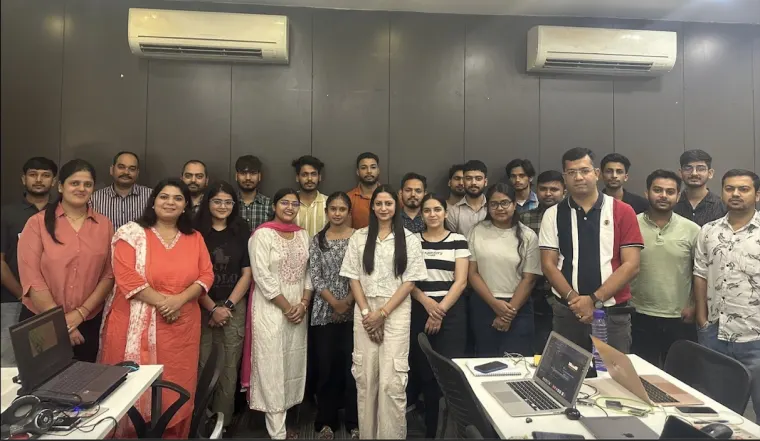
Digittrix product, design, engineering and QA team together in the office
Meet the team behind your build Product, design, engineering and QA working together.