 +91-8727000867
 +64 22 003 5555


Why Your Business Website Should Be Integrated with Your CRM
Quick takeaway: Integrating your CRM with your website boosts lead conversions, improves customer data accuracy, streamlines operations and improves team productivity through automation and centralized access.
Planning ERP, CRM, or automation software? Review service details, ERP planning, and CRM workflow guides.
ERP and CRM development services | Custom ERP development guide | Custom CRM planning guide
Integrating your CRM with your website boosts lead conversions, improves customer data accuracy, simplifies operations and improves team productivity through automation and centralized access.
Highlights
- Businesses with CRM integration experience a 29% increase in lead conversion rates and faster response times.
- Integrated systems cut manual data entry mistakes by up to 35%, boosting accuracy.
- CRM-linked websites reduce operational costs by 20% through automated follow-ups and task allocation.

Co-Founder
Harsh Abrol 
Since 2014, Digittrix has helped companies optimise digital products for stronger conversions.
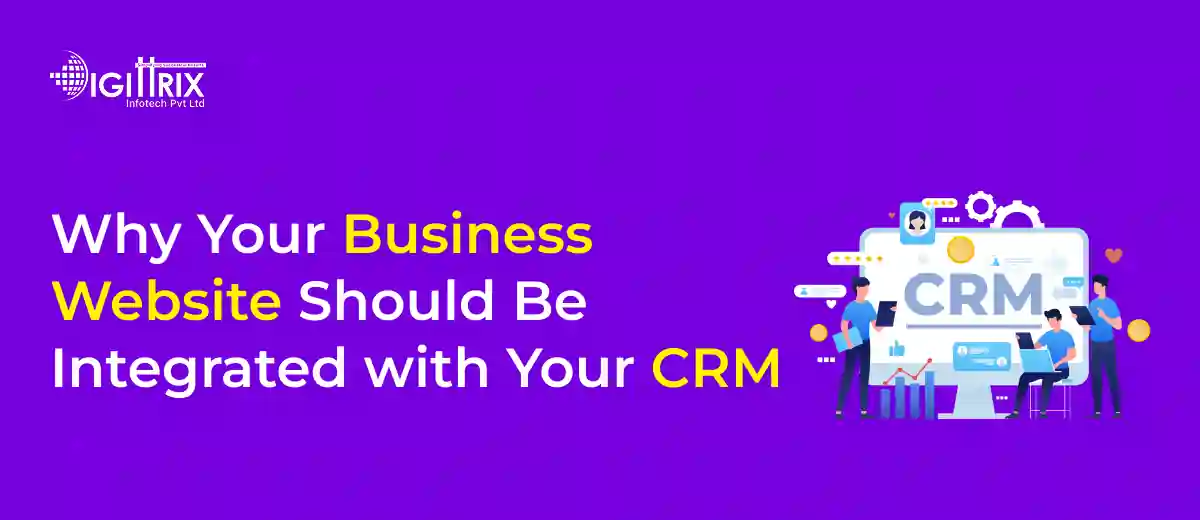
In today's business environment, small businesses and emerging firms depend on digital tools to stay competitive. Websites and Customer Relationship Management (CRM) systems are among the most widely used tools. Your website serves as an entry point to your brand, while a CRM system handles customer details, leads, messages, and follow-ups.
These tools can work independently, but combining them creates a more efficient and effective setup. A customised CRM system that connects directly to your business website allows you to manage customer details, automate tasks, and improve follow-ups without the hassle of switching between platforms manually. This article explains why linking your business website with your CRM isn't just convenient but essential in today's business environment.
Looking to boost customer relationships? Discover the key benefits of integrating CRM with your website for greater efficiency and engagement.
Understanding What a CRM Is and Website Integration Means
A CRM, or Customer Relationship Management system, is a tool that businesses use to organise and manage customer data. It tracks interactions with current and potential customers, records buying habits, monitors marketing campaigns, and keeps your team aligned.
Website integration means your website and CRM software communicate automatically. When a visitor fills out a form, signs up for a newsletter, or makes a purchase, this data is instantly transferred to your CRM without manual input.
When both systems collaborate, you don’t just collect data—you make it work for you. Whether your business chooses customised CRM development services or utilises pre-built software, integration improves how data flows between the business and its customers.
Key Reasons to Integrate Your Website with Your CRM
1. Real-Time Data Collection
One of the main benefits of integration is real-time data collection. Whenever a customer or potential client fills out a form on your website—whether it’s a quote request, feedback, or contact form—the information is sent directly to your CRM system. This helps your team save time and reduces errors that occur with manual data entry.
For example, if you’re using a custom website development solution, you can customise the form fields on your website to match those in your CRM. This helps ensure consistent and complete data across both platforms.
2. Better Follow-Ups and Lead Management
Businesses risk losing valuable leads when there is a delay between capturing a lead and following up. By integrating with your website, leads are instantly saved in your CRM, prompting automated emails or task allocations to your sales team. This results in quicker responses and a greater chance of conversion.
When working with a CRM development company, businesses often request automation rules that can be triggered when a new lead comes in. For example, a new contact request from your website can create a task in the CRM for your sales team, set a reminder, and automatically assign the correct team member.
3. Improved Customer Interaction
Once a website visitor becomes a customer, tracking their future activity is essential. Integrated systems enable businesses to monitor ongoing behaviour, such as pages visited, downloads, or repeat visits. This data helps support teams respond in a more personalised way.
Moreover, when your CRM software development involves website tracking, you can record customer preferences, interests, and browsing history. This ensures that any future interaction is guided by past behaviour, making customer support more efficient and personalised.
4. Reducing Human Error
Manual data entry can cause mistakes. A single-digit error in a phone number or a typo in an email address can stop a lead from being contacted. When a customised CRM system is integrated with your website, each form submission is automatically recorded without manual input. This leads to cleaner data and fewer missed opportunities.
5. Centralized Data Management
Managing customer records across multiple platforms is both inefficient and risky. Disconnected systems can lead to incomplete records or create confusion among team members. Integration ensures your customer data is stored centrally and stays updated across all departments.
This centralization becomes especially useful when multiple team members manage different parts of customer service. Whether it’s marketing, sales, or support, everyone accesses the same up-to-date records.
When working with CRM development services, this centralised model is often built with access controls so that only relevant team members can view or modify specific parts of the customer data.
6. Smarter Marketing Campaigns
By merging your website data with your CRM, you gain a clearer understanding of your audience. For example, you can see which services or products attract the most interest and adjust your campaigns accordingly.
If your CRM development company offers email marketing modules or integrates with third-party tools, you can launch targeted email campaigns using data collected from your site. You can also measure the effectiveness of those campaigns more accurately.
7. Better Reporting and Business Forecasting
Having all customer-related activities tracked and stored in one place makes reporting much easier. Businesses can create reports that show data such as where leads came from, which pages they viewed before contacting, and how long it took to convert.
These reports help businesses forecast revenue, track progress, and identify gaps in their sales or support processes. Whether you’re using custom website development for a local enterprise or an organisation-level setup, this insight is very valuable.
8. Automating Repetitive Tasks
Integration reduces repetitive tasks, such as sending welcome emails or confirming appointments. Once a user signs up or submits a form, the CRM system can automatically send predefined messages, assign tasks to team members, or even start a customer onboarding process.
Custom CRM systems often include workflow builders that allow businesses to design processes based on specific triggers. Instead of hiring extra staff to handle increasing volumes, you let automation take care of routine tasks.
9. Improved Customer Retention
Businesses often focus on attracting new customers, but retaining existing ones is equally important. When your website is integrated with your CRM, you can offer timely support, customised deals, and regular check-ins, increasing the chance of customers staying loyal longer.
By monitoring website activity through the CRM, you can also identify when existing customers are exploring new services or displaying signs of dissatisfaction. Reaching out quickly can help stop customers from leaving.
10. Save Time and Lower Operating Costs
Manual processes are often slow and require additional staff. Automation through integration reduces workload and allows employees to focus on more important tasks. Over time, this enhances productivity and lowers operational costs.
A business that invests in CRM software development gains not only a tool tailored to its needs but also improved operational speed and accuracy.
Choosing the Right Setup: Custom vs Pre-Built CRMs
Some businesses choose pre-built CRM software. While these solutions are quick to set up, they often lack the flexibility required for unique business needs. A customised CRM system is designed specifically for your workflows, reporting requirements, and user preferences.
If you have experience with custom website development, then a tailored CRM will suit you better. It lets you connect specific pages, forms, and functions directly to CRM processes that are already customised to your operations.
Partnering with a CRM development company that understands your business goals helps you create a customised solution. You can choose the features you need, avoid unnecessary extras, and plan for growth from the start.
How to Start the Integration Process
The process of connecting your business website with your CRM should be approached carefully. Here are some fundamental steps:
- Review your existing tools: Make sure your current website platform is compatible with the CRM you plan to use or build.
- Identify key data points: What information do you need to collect from your website? (Leads, inquiries, purchase data, etc.)
- Choose the right CRM platform: Decide whether you’ll use an off-the-shelf system or invest in custom CRM development services.
- Hire a professional: Work with a team experienced in both custom website development and CRM integration.
- Test thoroughly: Before going live, make sure that the data flows correctly between your website and CRM, with no delays or errors.
- Train your staff: Make sure your sales, marketing, and support teams know how to use the integrated system effectively.
Wondering how CRM can transform your operations? Learn why a custom CRM system is essential for modern business success—from improved collaboration and integrations to scalable workflows.
Final Words
In a rapidly changing digital landscape, disconnected systems can hold back your business. Connecting your website with a CRM system boosts your data's usefulness, automates time-consuming tasks, and enhances how you manage customer relationships.
Whether you're starting fresh with a customised CRM system or enhancing an existing one, working with a trusted CRM development company is the first step. The benefits you gain—such as faster lead responses, cleaner data, and better decision-making—can have a lasting impact on your business performance.
From real-time data collection to accurate marketing and smarter reporting, CRM development services directly linked to your website lay a stronger foundation for customer success. Over time, this connection helps your business run more smoothly and keeps your team focused on what truly matters, serving your customers.
Integrate Your Business Website with Your CRM
In today’s digital world, linking your business website with a CRM system isn’t just beneficial, it’s crucial. Website and CRM integration allows you to collect visitor data, track user activity, and handle leads all in one place. This results in better customer service, quicker responses, and more efficient business operations.
At Digittrix, we assist businesses in connecting their websites with CRM systems to enhance sales management, support services, and decision-making through straightforward data access.
With experience since 2014, our developers craft smart solutions that connect your website to your customer database, providing your team with better tools to follow up, report, and manage customers all in one platform.
If you're considering connecting your website with a CRM and need expert advice to get started, contact our technical team today. Discuss your business needs with us, call +91 8727000867, or email digittrix@gmail.com.
Monthly SEO-GEO support for local businesses that need better visibility, better leads, and clearer reporting.
Do you need help in ERP/CRM Development ?


Join over 1500+ businesses we've already helped!
Recent Posts
22 May 2026
 FAQ's
FAQ's
It enables quicker access to customer details, improves support responses, and maintains a detailed record of interactions.
Yes, by providing your team with real-time customer data and automating follow-ups, it increases conversion chances.