+91-8727000867
 +64 22 003 5555


Top Back-End Frameworks for Scalable Website Development
Selecting a strong back-end framework plays a key role in performance, scalability, speed, and secure data handling for modern and growing online platforms.
Highlights
- Django cuts coding time by 50% due to its built-in tools for admin, auth, and security.
- Node.js supports over 1 million connections, enabling developers to create fast and real-time applications.
- Laravel powers 750,000+ websites worldwide, showing consistent performance in handling modern web needs

Co-Founder
Harsh Abrol 
4 min read
With Over 14 years of Experience in the IT Field, Helping Companies Optimise there Products for more Conversions
Creating a website that performs well, even as the number of users grows, requires solid planning and smart technology choices. One of the most important parts of this process is selecting the right back-end framework. A good back-end framework allows developers to build websites that handle traffic efficiently, respond quickly, and work smoothly under pressure.
In this article, we will take a close look at the best back-end frameworks used today for building scalable websites. These tools are popular among developers because they offer structure, flexibility, and the necessary tools to build powerful web applications. Whether you are working on custom website development or seeking options from a web development company, understanding these frameworks is essential.
Not sure which technologies are best for your startup product? Read this guide on choosing the right tech stack for your MVP development to understand how the right tools can impact performance, scalability, and development speed.
What is a Back-End Framework?
Before we go further, let’s understand what a back-end framework is. A back-end framework provides a base or structure for developers to build server-side applications. It helps manage the database, server, and business logic of a website. In simple words, it controls how data is stored, processed, and sent to the user interface (or front-end).
Good back-end frameworks save time and reduce the chance of bugs by offering ready-to-use tools, features, and methods. They also help maintain clear coding standards across projects.
Why the Right Framework Matters for Scalable Website
Scalability means your website can grow. It can serve more users, manage more data, and handle more tasks without slowing down. Choosing a framework that supports scalability allows developers to build websites that continue to work well as demand increases.
Not every framework is designed to handle growth. Some work well for small projects but struggle when traffic spikes. That’s why developers and businesses offering web development services often focus on proven frameworks that are known to handle heavy loads and larger user bases.
1. Node.js
Key Features:
- Uses JavaScript on both front-end and back-end
- Handles thousands of connections at once with non-blocking I/O
- Lightweight and fast
Why It's Good for Scalability:
Node.js is designed for high performance and can handle multiple requests simultaneously. This makes it a great choice for websites that expect a lot of traffic or real-time activity, such as messaging apps or streaming platforms.
Many developers choose Node.js when they want to stick with one programming language across the entire project. It also has a large community, which means strong support and frequent updates.
2. Express.js
Key Features:
- Minimalistic and unopinionated
- Fast to set up and easy to use
- Works well with databases and front-end frameworks
Why It's Good for Scalability:
Although small in size, Express is highly flexible. Developers can build large-scale applications by adding components as needed. It gives full control over how routes, middleware, and logic are handled.
Businesses looking for custom website development often choose Express.js for its speed and ability to grow with their needs.
 Build Scalable Websites with the Right Back-End Framework
Planning a high-performance website or web application? Talk to Digittrix experts to choose the best back-end framework for scalability, speed, and long-term growth.
3. Django
Key Features:
- Built-in admin panel
- Strong security tools
- Automatic database migrations
Why It's Good for Scalability:
Django follows the “Don’t Repeat Yourself” (DRY) principle and encourages clean, maintainable code. It can support complex applications and integrates easily with various database systems. Websites like Instagram and Pinterest have used Django to manage millions of users.
When using web development services, Django is often recommended for businesses needing strong data handling, fast development, and long-term project support.
4. Laravel
Key Features:
- Clean and expressive syntax
- Blade templating engine
- Built-in tools for testing
Why It's Good for Scalability:
Laravel supports caching, session management, and database operations efficiently. Its queue system allows tasks to be delayed and processed in the background, which improves performance during high traffic.
Laravel also has Laravel Horizon and Laravel Vapour, tools designed to manage queues and serverless deployments. These features make it easier to scale apps based on traffic and data demands.
5. Ruby on Rails
Key Features:
- Convention over configuration
- Built-in testing framework
- Code generators for fast development
Why It's Good for Scalability:
Rails applications can be optimized with background jobs, caching, and cloud hosting. It works well for startups and medium-sized applications. However, with proper optimization, it can also support large-scale platforms.
Web development companies often use Ruby on Rails for MVPs (Minimum Viable Products) that may later grow into larger services.
6. Spring Boot
Key Features:
- Built-in security
- Microservices architecture support
- Easy database access with JPA
Why It's Good for Scalability:
Spring Boot applications can be broken down into microservices. This means different parts of your application can run independently and be scaled separately. It’s ideal for companies needing stable, secure, and large-scale web platforms.
Spring Boot is often a go-to option for companies offering web development services to industries like banking, health, or e-commerce.
Build Scalable Web Applications with the Right Back-End Framework
Choosing the right technology is crucial for building fast, secure, and scalable websites. Connect with Digittrix experts to find the best framework for your project.
7. ASP.NET Core
Key Features:
- Cross-platform support
- High performance
- Built-in dependency injection
Why It's Good for Scalability:
ASP.NET Core is designed for performance. It can handle large numbers of requests and has a modular system. It is used by many large organizations for building enterprise-level applications.
This framework is often used by a web development company that works with Microsoft technologies or enterprise-grade clients.
8. Flask
Key Features:
- Lightweight and easy to understand
- Flexible routing
- Good for small to medium projects
Why It's Good for Scalability:
Flask is often used as a base for microservices. This makes it a solid choice for developers who want complete control over how the app is structured. Though it’s lightweight, Flask can handle heavy loads with proper planning.
Businesses investing in custom website development often choose Flask when they need flexibility and speed for smaller applications that might grow later.
How to Choose the Right Back-End Framework
There’s no single answer for which framework is the best. The right choice depends on:
- The programming language you prefer
- The size of your project
- The skills of your development team
- The features you want to build
- Your timeline and budget
Working with a professional web development company can help you pick the most suitable option for your project goals.
Wondering why growing businesses opt for custom web development? Discover top‑rated reasons why customization fuels growth in the digital era.
Final Words
The back-end framework you choose lays the foundation for your website's performance and growth. Some frameworks offer speed and flexibility, while others provide structure and advanced features for managing large applications. Each one mentioned above has its strengths and is used by thousands of developers around the world.
When planning custom website development, it is important to consider future scalability. A website that works well today should continue to serve its users tomorrow as their numbers grow. That’s why making the right decision early can save time, effort, and cost down the road.
With the help of professional web development services, you can make the best use of these frameworks to build websites that are strong, responsive, and ready for growth.
Build a Scalable Website with the Right Frameworks at Digittrix
Build strong, high-performance websites using some of the most trusted back-end frameworks in the industry. At Digittrix, we assist businesses in creating scalable and secure web applications by choosing the best tools for each project’s needs. Whether it's Node.js, Django, Laravel, or ASP.NET Core, we guide you through the most suitable technologies that support long-term growth and performance.
Thinking of starting your custom website project? Partner with Digittrix a website development company with over 14 years of experience in professional web development. Our skilled team provides tailored web development services based on reliable frameworks, ensuring functionality, stability, and efficiency.
If you're planning to develop a scalable web application and aren’t sure where to start, book a consultation with our experienced technical managers. Call us at +91 8727000867 or send your questions to digittrix@gmail.com.
Let Digittrix help you build a powerful, scalable website from the ground up.
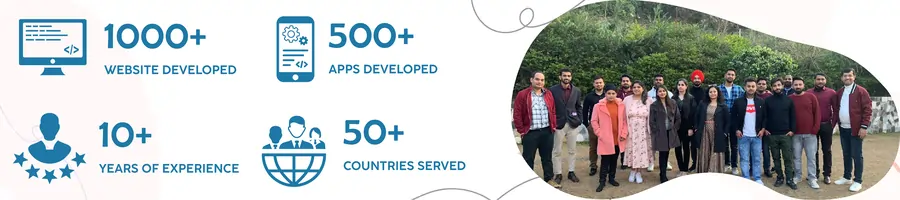
Do you need help in Web Development ?


Join over 1500+ businesses we've already helped!
Table of Contents
Recent Posts
 FAQ's
FAQ's
A good scalable framework effectively handles many users, supports large databases, and maintains steady performance under high traffic or data loads.
Yes, certain frameworks are more appropriate for complex applications because of their structure, performance, and built-in features.
Some frameworks are flexible enough to support both small and large projects, although some tools may be better suited for large-scale solutions.
Using a single language can simplify development, but many modern projects employ multiple languages depending on the application’s requirements and architecture.




 Request Instant Call
 Hire Remotely