+91-8727000867
 +64 22 003 5555


How to Integrate Ecommerce Platforms in India with ERP/CRM in India
AI productivity tools help businesses save time, reduce costs, improve communication, and manage tasks effectively, enabling teams to focus on innovation and growth.
Highlights
- Order processing rises nearly 40% after ecommerce platforms connect directly with ERP systems.
- Inventory errors drop by nearly 55% when businesses synchronize product data across all sales channels.
- Customer response time improves by 30% with CRM-supported history tracking and automated process updates.

Co-Founder
Harsh Abrol 
4 min read
With Over 14 years of Experience in the IT Field, Helping Companies Optimise there Products for more Conversions
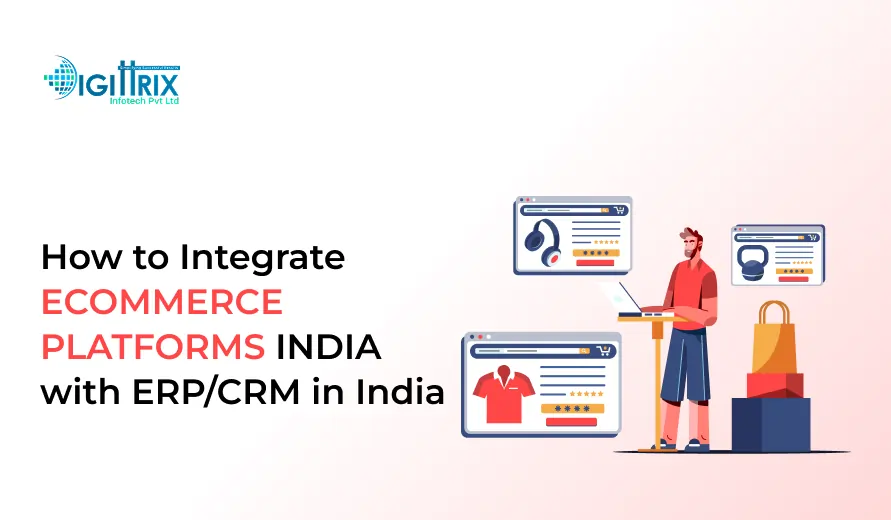
Managing an online store in India has become more complex and competitive than ever. Customers expect quick updates, accurate stock information, fast delivery, and seamless communication at every stage. As a result, many Indian businesses now look for ways to connect their ecommerce platforms with ERP or CRM systems. When both systems work together, business owners gain clearer insights, faster operations, and better customer service without duplicating efforts workspaces.
This detailed guide explains how e-commerce platforms and ERP/CRM integrations work, why Indian businesses benefit from them, the steps involved, common challenges, and practical methods for completing the process easier.
Looking to connect your business systems for smoother operations? Read how ERP integration supports business success by unifying data across sales, inventory, finance, and customer management.
Why Indian Businesses Want Ecommerce and ERP/CRM Integration
A typical ecommerce store in India handles product listings, stock updates, orders, payments, returns, shipping, refunds, and daily customer messages. Managing all of this manually becomes slow and confusing. ERP or CRM systems help store this information in one place, but only if they can communicate properly with the online platform store.
When both platforms are connected:
- Businesses avoid entering the same information multiple times software.
- Product stock remains accurate across all channels.
- Customer communication becomes faster and more efficient structured.
- Finance teams receive complete data in one place dashboard.
- Owners view the complete picture of sales, returns, and inquiries performance.
This is why companies planning Ecommerce mobile app development or improving their existing platforms find ERP/CRM connection extremely helpful. It allows them to manage the entire business more clearly and with fewer errors mistakes.
What Happens When Ecommerce Works Separately from ERP/CRM?
Many new sellers in India begin their online journey using a website builder or marketplace seller portal. As order volume increases, they often encounter challenges:
Multiple Entries for the Same Order
A team member updates the order on the website, another enters it in the ERP, and someone else updates stock separately. This leads to confusion.
Wrong Stock Levels
If the website shows “in stock” but the warehouse ERP indicates “out of stock,” customers become unhappy.
Delayed Order Processing
Teams spend more time gathering details from various sources instead of delivering orders.
Difficulty in Managing Multiple Sales Channels
If a brand sells through its own website, mobile app, offline store, and marketplaces, the issue becomes even more complex bigger.
Incomplete Customer History
Customer complaints or inquiries are difficult to track when data is stored in separate locations systems.
To avoid these issues, more Indian companies are now using Ecommerce app development services that help prepare their online stores for future ERP/CRM integration from the start beginning.
 Struggling to Manage Orders, Stock & Customer Data Across Systems?
Disconnected ecommerce platforms and ERP/CRM systems often create delays, stock mismatches, and reporting issues. Digittrix helps Indian businesses connect their online stores with ERP and CRM software for accurate data flow, faster order processing, and simplified daily operations.
Connect Ecommerce with ERP/CRM →Benefits of Connecting Ecommerce with ERP or CRM in India
Here are the main advantages Indian businesses gain after integration:
- Real-Time Stock Updates
- Faster Order Handling
- Accurate Accounts and Tax Reports
- Better Customer Communication
- Better Planning
This increasing demand for automation has also boosted the need for ERP/CRM software development in India, as businesses seek systems tailored to their product lines, sales patterns, and teams structure.
What Systems Are Commonly Integrated with Ecommerce in India?
Various Indian businesses choose different tools based on their size and objectives. Some popular options include:
- ERP Platforms: SAP, Tally, Zoho Books, Microsoft Dynamics, Oracle NetSuite, Marg ERP, Busy, Odoo
- CRM Platforms: Zoho CRM, Salesforce, HubSpot, Freshworks, LeadSquared
- Ecommerce Platforms: Shopify, WooCommerce, Magento, OpenCart, custom-built online stores, and mobile apps
- Marketplace Systems: Amazon Seller Central, Flipkart Seller Hub, Meesho, JioMart
- Payment Gateways: Razorpay, Paytm, PhonePe, PayU, CCAvenue
- Shipping Partners: Delhivery, Blue Dart, Shiprocket, India Post, XpressBees
Indian businesses select different combinations based on their budget and product type. Consulting an Ecommerce app development company helps them understand what aligns with their long-term goals.
Step-by-Step Process for Ecommerce–ERP/CRM Integration in India
Step 1: List Out All Data Points You Want to Connect
Begin by observing how your business currently functions. Find the specific points where data moves between platforms, such as:
- Product details
- Stock updates
- Order data
- Customer information
- Shipping details
- Refunds and cancellations
- Invoice data
- Tax and GST fields
This assists the development team in designing the correct API connections.
Step 2: Select the Integration Method
There are three common approaches:
- API-Based Integration
- Middleware or Connector Apps
- Custom-Built Integration
Step 3: Prepare the Ecommerce Platform for Integration
If the ecommerce store is custom-built, verify that it supports:
- Standard APIs
- Webhooks
- Secure data processing
- Module-based architecture
If the business uses Shopify, WooCommerce, or Magento, some of these features are available default.
At this point, companies focusing on on-demand Ecommerce app development also prepare their mobile apps for the future connections.
Step 4: Prepare the ERP or CRM System
Developers check:
- API availability
- Data structure
- Access permissions
- Field mapping
- Security requirements
Teams working on ERP/CRM software development ensure the system can handle large amounts of data without issues delays.
Step 5: Map the Data Fields
Field mapping means matching:
- Ecommerce product name → ERP item name
- Ecommerce SKU → ERP SKU
- Ecommerce price → ERP price
- Ecommerce order ID → ERP order ID
Field mapping is a crucial step because incorrect mapping leads to errors in reports, stock management, and tax entries.
Step 6: Testing the Integration
Before going live, developers run tests:
- Product sync test
- Stock sync test
- Order flow simulation
- Invoice creation test
- Shipping update test
- Customer CRM entry test
This prevents issues during live customer interactions orders.
Step 7: Go Live and Monitor
After switching to the live version:
- Monitor sales data
- Check stock levels
- Confirm invoice creation
- Observe CRM entries
- Review system speed
Many businesses seek assistance from professional teams that offer Ecommerce app development services to keep everything running smoothly.
 Planning to Connect Your Ecommerce Platform with ERP or CRM?
Integrating ecommerce platforms with ERP or CRM systems involves more than just software setup. Data mapping, API connections, inventory sync, GST fields, and order workflows all need proper planning. Digittrix helps Indian businesses evaluate, design, and implement integration solutions that match real operational requirements.
Challenges Indian Businesses Face During Integration
Even though integration supports long-term growth, challenges exist:
- Different Data Formats.
- Old or Outdated Software.
- High Order Volume
- Poor Internet at Warehouses
- Multiple Warehouses
These issues are common in India, especially for businesses transitioning from basic software to more advanced solutions systems.
Future of Ecommerce–ERP/CRM Integration in India
India’s retail market is expanding quickly across metros, tier-2, and tier-3 cities. Online shopping habits, UPI payments, and doorstep delivery expectations are increasing. As a result:
- More businesses will prefer customized ERP/CRM systems.
- Mobile apps will play a central role.
- Integration will become a mandatory requirement, not optional feature.
- Advanced shipping, warehousing, and customer support tools will directly integrate with ecommerce platforms.
Companies involved in on-demand ecommerce app development are already preparing mobile apps that communicate smoothly with ERP/CRM systems.
Concerned about data breaches? Check Digittrix's simple security tips to protect your business!
Final Words
Integrating ecommerce platforms in India with ERP or CRM provides clarity, saves time, and gives you greater control over daily operations. Whether you operate a small online store or a large multi-channel enterprise, connecting these systems helps you minimize errors and manage your business more effectively confidence.
With proper planning, accurate data mapping, and support from developers experienced in ERP/CRM software development, any Indian business can strengthen its ecommerce setup and serve customers more quickly accuracy.
Integrate Ecommerce Platforms and ERP/CRM with Digittrix
Connecting e-commerce platforms with ERP or CRM systems has become essential for businesses seeking clear information flow, accurate stock updates, and smooth order management. As more Indian SMEs and growing companies adopt digital operations, they search for solutions that connect their online stores, mobile apps, and internal management systems in one place.
Digittrix helps businesses build and integrate ecommerce platforms with ERP and CRM systems so product details, customer records, orders, invoices, and reports stay consistent across all channels. With over 14 years of industry experience, our team understands the challenges companies face managing data across different software platforms.
Call us at +91 8727000867 or email digittrix@gmail.com to speak with our team and get a complete consultation.
Do you need help in ERP/CRM Development ?


Join over 1500+ businesses we've already helped!
Table of Contents
Recent Posts
 FAQ's
FAQ's
Shopify, WooCommerce, Magento, OpenCart, custom websites, Android/iOS apps, and major Indian marketplaces such as Amazon and Flipkart are frequently integrated.
Product details, stock numbers, order information, customer profiles, invoices, shipping updates, and refund entries are typically synced.
Most modern systems use APIs for smooth data flow. Without APIs, developers may need to build custom connectors to help both systems communicate.
The duration depends on the number of products, sales channels, ERP/CRM structure, and custom needs. Most small setups take a few weeks, while larger setups may take longer.
Yes. Even small sellers gain benefits such as fewer errors, faster processing, and better clarity. Many scalable systems allow them to start small and expand later.
Common issues include mismatched data fields, old ERP systems without APIs, high order volume, multiple warehouses, and differences in data formats.
A technical team is usually required to handle APIs, field mapping, testing, and setup. Professional developers make the process smoother and reduce errors.



 Request Instant Call
 Hire Remotely