 +91-8727000867
 +64 22 003 5555


Custom Web Application Development for Enterprises
Custom web application development helps enterprises unify systems, improve workflow accuracy, reduce errors, and support scalable digital operations.
Highlights
- Enterprise web apps can reduce manual process errors by up to 45% annually.
- Integrated systems improve cross-department data access by 60% on average.
- Scalable web platforms cut long-term software licensing costs by 30%.

Co-Founder
Harsh Abrol 
4 min read
With Over 14 years of Experience in the IT Field, Helping Companies Optimise there Products for more Conversions
In today’s competitive digital economy, enterprises rely on structured systems to manage operations, data, teams, and customers across multiple departments and locations. Custom Web Application Development plays a central role in helping organizations build systems that align with their workflows rather than forcing teams to adjust to generic software. During the initial planning phase, decision-makers often realize that off-the-shelf tools cannot fully support internal processes, reporting standards, security requirements, or long-term expansion goals. That is where a purpose-built web platform becomes a strategic asset.
Large organizations manage finance, HR, logistics, sales, procurement, and compliance simultaneously. When these departments operate with disconnected tools, inefficiencies increase. A well-designed web-based system integrates these functions into a unified structure. This article explains how enterprise-focused web platforms are planned, developed, secured, scaled, and maintained, while also covering cost considerations, architecture planning, SEO relevance, and long-term sustainability.
Want to grow your home care business? Read Digittrix’s custom website insights to stand out in the industry!
Custom vs Ready-Made Software Comparison
Enterprises often struggle to decide between subscription-based tools and custom-built systems. Below is a practical comparison:
| Factor | Custom Enterprise System | Ready-Made Software |
|---|---|---|
| Flexibility | Designed around internal workflows | Limited customization |
| Ownership | Full control over the system and data | Vendor-controlled environment |
| Scalability | Structured expansion planning | Feature-based limitations |
| Licensing | Structured development cost | Recurring subscription fees |
| Security | Internal security framework | Vendor-defined security |
| Integration | Built around existing systems | API limitations possible |
While ready-made software may work for small teams, enterprises with complex operations often benefit from a system tailored to their processes.
Why Enterprises Invest in Custom Web Application Development
Enterprises differ from small businesses in scale, complexity, and regulatory responsibility. A standardized subscription tool may offer general functionality, but it rarely matches the depth of enterprise workflows.
Here are the primary reasons enterprises choose dedicated systems:
1. Complex Departmental Workflows
Large organizations operate with layered approval structures, multi-step procurement processes, compliance documentation, and region-based policies. A customized web system reflects these internal rules directly within the software logic.
2. Data Centralization
Data fragmentation causes confusion and reporting errors. Enterprises need a central database where departments can access real-time information based on role-based permissions.
3. Security Requirements
Enterprises manage confidential financial records, employee data, contracts, and client information. A custom-built web platform provides advanced security layers aligned with internal policies and industry regulations.
4. Long-Term Scalability
As organizations grow, they add users, departments, products, and regional branches. A scalable architecture enables expansion without replacing the entire system.
Real-World Enterprise Use Case
To better understand how enterprise-level web systems create business value, consider a multi-location logistics company operating across five states.
The Challenge
The company was using spreadsheets, emails, and disconnected accounting software to manage fleet operations, vendor invoices, and shipment tracking. This led to in:
- Delayed reporting
- Data duplication
- Manual errors in billing
- Lack of real-time shipment visibility
The Solution
A centralized, web-based enterprise platform was developed with:
- Real-time fleet tracking dashboard
- Vendor management portal
- Automated invoice generation
- Role-based access for operations, finance, and management
- Integrated accounting API
The Result
After deployment:
- Reporting time reduced by 45%
- Billing errors decreased significantly
- Operational coordination improved
- Management received real-time performance data
This example demonstrates how a structured enterprise web system directly improves operational clarity and accountability.
Custom Web Application Development for Large-Scale Business Systems
When planning digital infrastructure, companies must consider performance, user load, integration, and operational continuity. Custom Web Application Development offers flexibility in building systems that align with internal business models rather than adjusting processes to fit pre-built software.
Enterprise environments often include:
- Thousands of active users
- Large databases with structured and unstructured data
- Multi-location access
- Integration with accounting, CRM, ERP, and HR systems
- Compliance tracking and reporting
A purpose-built solution ensures that all these components operate within a single, secure, and scalable environment.
Understanding Enterprise Web Application Development
Enterprise web application development focuses on large organizations with high-volume operations. These applications are not simple websites; they are internal or external systems designed to manage structured business processes.
Examples include:
- Enterprise Resource Planning (ERP) platforms
- Customer portals
- Vendor management systems
- Project management platforms
- Inventory and logistics systems
- Internal communication dashboards
Unlike smaller applications, enterprise platforms require load balancing, a distributed architecture, optimized database queries, and security monitoring.
 Build Secure & Scalable Enterprise Web Applications for Your Business
Planning to develop a custom enterprise web platform? Connect with Digittrix experts to design, build, and scale your business systems.
Core Components of Custom Enterprise Software Development
Custom enterprise software development encompasses multiple technical and strategic layers. It is not limited to writing code; it also includes planning, architecture design, compliance alignment, and scalability planning.
Key components include:
Requirement Documentation
Detailed documentation defines user roles, workflows, business rules, reporting formats, and integration requirements.
System Architecture
Architecture planning determines:
- Server structure
- Database design
- API integrations
- Security layers
- Backup systems
User Interface Design
Enterprise platforms must prioritize clarity and logical navigation. Employees should complete tasks quickly without confusion.
Backend Logic
Backend systems handle:
- Data processing
- Authentication
- Permission control
- Automated workflows
- Business rules
Testing and Validation
Before deployment, the system undergoes:
- Functional testing
- Performance testing
- Security audits
- User acceptance testing
Web Application Development Services for Enterprises
When organizations seek web application development services, they typically expect more than coding. Enterprise projects require structured project management and long-term technical support.
Professional development teams usually provide:
- Business analysis
- UI/UX design
- Backend and frontend development
- API integrations
- Security implementation
- Cloud deployment
- Ongoing maintenance
Choosing the right service provider significantly affects system performance and sustainability.
Enterprise Software Solutions and System Integration
Enterprise software solutions often involve integrating multiple systems into a single digital ecosystem. Enterprises rarely rely on a single tool. Instead, they use accounting software, HR platforms, payment gateways, inventory systems, and customer management tools.
A well-designed web platform connects these systems via APIs. This integration ensures:
- Automated data synchronization
- Reduced manual entry
- Fewer reporting errors
- Faster decision-making
Integration planning must occur during the architecture phase to prevent performance issues later.
Business Web Application Development and Operational Efficiency
Business web application development supports both internal operations and external interactions. Internal applications manage processes, while external portals may serve customers, vendors, or partners.
For example:
- A customer portal may allow order tracking and document access.
- A vendor portal may manage purchase orders and invoices.
- An internal dashboard may track sales performance and employee productivity.
When these systems function within one structured environment, enterprises achieve operational clarity and data consistency.
Development Stages in Enterprise Web Projects
Large-scale web application projects follow structured phases to reduce risks and maintain clarity.
1. Business Requirement Analysis
Stakeholders define objectives, operational challenges, and expected outcomes. Clear documentation reduces scope changes later.
2. Technical Planning
Developers design:
- Database structure
- Server environment
- Microservices architecture (if required)
- Security framework
3. Interface Design
Designers create wireframes and prototypes to visualize workflows. Feedback is collected before development begins.
4. Development Phase
Development usually follows Agile methodology. Work is divided into sprints, allowing regular testing and feedback.
5. Testing Phase
Testing covers:
- Security vulnerabilities
- Performance under high user loads
- Data accuracy
- Compatibility across browsers and devices
6. Deployment
After testing, the system is deployed on cloud infrastructure such as AWS, Azure, or private servers.
7. Maintenance and Upgrades
Enterprise systems require ongoing monitoring, patch updates, and feature enhancements.
Enterprise Web Application Architecture Explained
Enterprise platforms require a stable and scalable architecture.
Monolithic vs Microservices Architecture
Monolithic Architecture
- Single unified codebase
- Suitable for mid-sized enterprise projects
- Easier deployment in early stages
Microservices Architecture
- Separate services for different modules
- Independent deployment capability
- Better scalability for large enterprises
API-First Design
Modern enterprise systems rely on APIs to connect:
- Payment gateways
- ERP systems
- CRM platforms
- HR tools
- Third-party services
API-first architecture ensures system flexibility and long-term scalability capability.
Cloud-Native Infrastructure
Cloud hosting supports:
- Auto-scaling
- Data backup
- Load balancing
- High availability
This structure reduces downtime and improves performance under heavy traffic.
Technology Stack for Enterprise Applications
Choosing the right technology stack depends on scalability, performance requirements, and long-term maintainability.
Frontend Technologies
- React
- Angular
- Vue.js
- HTML5
- CSS3
- JavaScript
Backend Technologies
- Laravel (PHP)
- Node.js
- Django (Python)
- Spring Boot (Java)
- .NET Core
Database Systems
- MySQL
- PostgreSQL
- MongoDB
- Microsoft SQL Server
Cloud Infrastructure
- Amazon Web Services
- Microsoft Azure
- Google Cloud Platform
Each component must support high-performance, structured data handling and secure authentication.
Security Framework in Enterprise Web Platforms
Security is a priority in enterprise-level systems.
Role-Based Access Control
Users only access information relevant to their responsibilities.
Multi-Factor Authentication
Adds a security layer during login.
Data Encryption
Sensitive data is encrypted both in storage and transmission.
Regular Audits
Security audits identify vulnerabilities and prevent breaches.
Compliance Standards
Enterprises may need to comply with GDPR, HIPAA, ISO standards, or region-specific regulations.
Risk Management in Enterprise Web Projects
Enterprise digital systems require significant investment and operational dependence. Risk management must be planned early.
Data Breach Risk
Mitigation strategies include:
- Encryption protocols
- Firewalls
- Access monitoring
- Security audits
Downtime Risk
To reduce downtime:
- Implement load balancing
- Use redundant servers
- Plan disaster recovery procedures
Compliance Risk
Enterprises operating in regulated industries must align their systems with legal standards. Proper documentation and audit trails prevent penalties.
A structured risk management approach increases long-term system stability.
Enterprise Custom Web Application Development for Scalable Business Growth
Consult Digittrix experts to build secure, high-performance enterprise web systems tailored to your business workflows and scalability needs.
Performance Optimization and Scalability
Enterprise applications must handle high traffic and large datasets without performance degradation.
Strategies include:
- Load balancing
- Database indexing
- Caching mechanisms
- Horizontal scaling
- Server clustering
Planning for scalability during the architecture stage prevents future performance bottlenecks.
Cost Factors in Enterprise Web Development
The cost of enterprise web platforms varies depending on:
- Number of modules
- System complexity
- Integration requirements
- Security features
- User load
- Development timeline
Although initial development requires investment, long-term operational savings often justify the cost.
KPIs to Measure Enterprise Web Application Success
To evaluate performance, enterprises should track measurable indicators.
Operational KPIs
- Reduction in manual workload
- Process completion time
- Error reduction rate
Financial KPIs
- Cost savings from automation
- Reduced dependency on multiple tools
- Improved billing accuracy
Productivity KPIs
- Employee task completion rate
- Cross-department collaboration metrics
- Report generation speed
Tracking these KPIs helps management objectively evaluate return on investment.
Challenges in Enterprise Web Projects
Changing Requirements
Large organizations often modify requirements during development. Clear documentation and phased implementation reduce confusion.
Data Migration
Migrating from legacy systems requires careful planning to prevent data loss.
User Adoption
Employees may resist new systems. Training sessions and clear documentation support adoption.
Integration Complexity
Connecting multiple existing systems requires precise API planning and testing.
Long-Term Value of Enterprise Web Platforms
A well-structured enterprise system serves as a digital backbone for operations. It supports reporting, compliance tracking, workflow automation, and interdepartmental collaboration.
As organizations expand into new markets, introduce new products, or restructure internal processes, a scalable web-based system adapts.
Measuring ROI in Enterprise Web Development
Return on investment can be measured by:
- Reduced manual workload
- Faster report generation
- Lower operational errors
- Improved internal communication
- Reduced dependency on multiple software subscriptions
When systems are built on operational logic, efficiency increases across departments.
Planning to launch an online grocery platform? Explore Digittrix’s grocery website development guide to get started!
Final Words
Custom Web Application Development remains a strategic investment for enterprises seeking structured digital systems that align with their internal workflows. Unlike generic platforms, purpose-built web applications offer scalability, data control, integration flexibility, and long-term sustainability.
From architecture planning to deployment and maintenance, enterprise-level projects require careful analysis, security implementation, and performance optimization. Secondary elements such as enterprise web application development strategies, custom enterprise software development planning, web application development services selection, enterprise software solutions integration, and business web application development models all contribute to project success.
When executed with proper planning and technical expertise, enterprise web platforms support operational clarity, regulatory compliance, and scalable growth. For large organizations managing complex processes, investing in a dedicated web system is not merely an IT upgrade; it is a structured approach to managing modern business operations efficiently and securely.
Build a Custom Web Application for Enterprise Growth with Digittrix
For enterprises, investing in the right digital infrastructure is a strategic business decision that affects operational efficiency, scalability, and long-term performance. At Digittrix, we specialize in Custom Web Application Development for Enterprises, delivering robust, secure, and scalable web platforms tailored to complex business workflows.
Large organizations need more than standard software. They require structured web systems that manage multi-departmental operations, integrate with existing ERP and CRM tools, uphold strict security standards, and support growing user bases. Our team builds enterprise-grade web applications that align with your internal processes and prepare your business for future growth.
Whether you need an internal management portal, an enterprise dashboard, a vendor management system, a customer-facing platform, or a fully integrated business web solution, we provide end-to-end development, from business analysis and architecture planning through deployment and long-term maintenance.
With more than 14 years of experience delivering scalable digital solutions across industries such as healthcare, retail, logistics, finance, and manufacturing, Digittrix combines technical depth with practical business acumen. Our enterprise web applications are engineered for performance, data security, compliance, and long-term scalability.
If your organization plans to implement a secure, scalable, and performance-driven web platform, Digittrix is ready to support your vision.
Call us at +91 8727000867 or email digittrix@gmail.com to schedule your enterprise consultation today.
Do you need help in Web Development ?


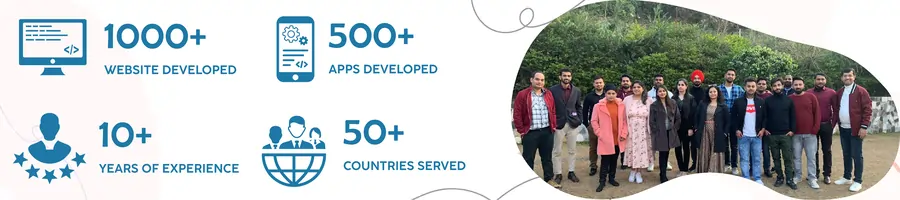
Join over 1500+ businesses we've already helped!

Table of Contents
Recent Posts
 FAQ's
FAQ's
Development timelines depend on project complexity, the number of modules, integrations, and security requirements. A mid-scale enterprise platform may take 4–6 months, while large, multi-departmental systems can require 8–12 months, including testing and deployment.
Enterprise-grade web systems typically include role-based access control, multi-factor authentication, encrypted databases, secure APIs, activity logs, and regular security audits. These measures help protect sensitive business data and ensure compliance with industry regulations.
Yes. Most enterprise systems are built with API-based integration capabilities. They can connect to ERP platforms, accounting software, HR systems, CRM tools, and payment gateways to keep data synchronized across departments.
ROI is measured by assessing improvements such as reduced manual workload, faster reporting cycles, fewer operational errors, improved cross-departmental coordination, and consolidation of multiple software subscriptions into a single centralized platform.

